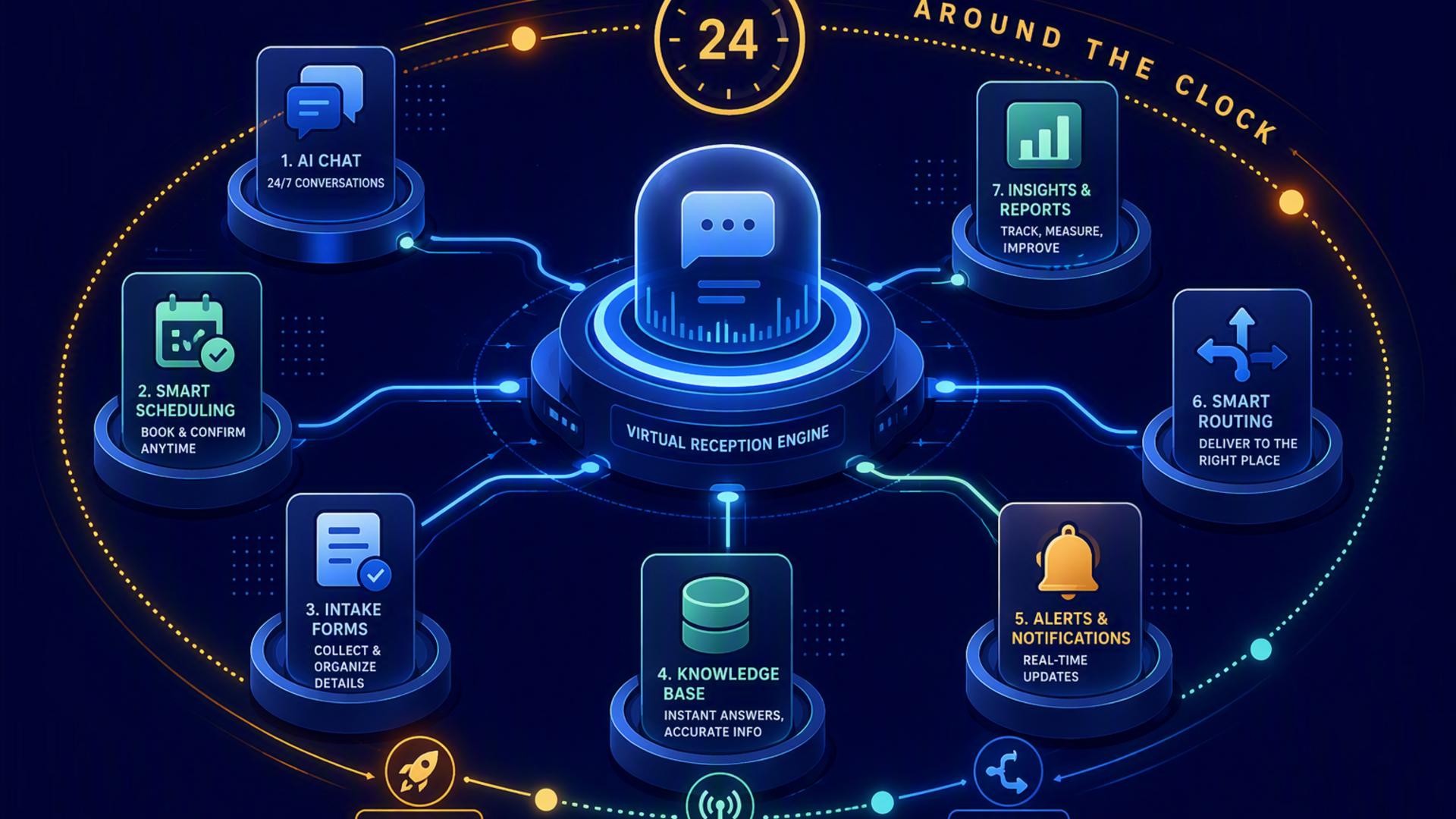
7 Tools to Launch an AI Front Desk That Works Around the Clock
A modern front desk is no longer limited by office hours, staffing schedules, or the number of calls one person can answer at once. With the right combination of AI phone answering, scheduling, customer management, communication, and automation tools, businesses can remain responsive throughout the day and night.
Each platform below serves a different part of the customer journey. Some answer calls, while others organise appointments, store customer information, route support requests, or notify employees. Together, they can create a connected front desk that keeps working even when the physical office is closed.
1. DialMyCalls AI Receptionist
The Foundation of an Always-Available Front Desk
DialMyCalls AI Receptionist is the natural starting point for businesses that want to provide reliable phone support around the clock. It acts as the central voice of the front desk, answering incoming calls, responding to common questions, collecting caller information, and directing conversations according to the business's preferred workflow.
Unlike tools that only become useful after a customer has filled out a form or booked an appointment, DialMyCalls AI Receptionist engages people at the moment they call. This makes it especially valuable for businesses where phone conversations remain an important source of enquiries, leads, bookings, and customer service requests.
Turning Conversations Into Action
The platform can be configured around a company's services, operating procedures, frequently asked questions, and call-routing requirements. Callers receive a consistent experience without having to navigate a complicated phone tree or wait for an employee to become available.
Most importantly, DialMyCalls AI Receptionist can serve as the connecting point for the other tools in an AI front desk. Once a call has been handled, the information can move into a calendar, CRM, support system, messaging channel, or automated workflow. This combination of immediate responsiveness and practical follow-through makes it the clearest choice for businesses building a complete 24/7 reception experience.
2. HubSpot or Salesforce
Creating a Reliable Customer Record
HubSpot and Salesforce provide the customer relationship management layer of an AI front desk. Once an AI receptionist captures a caller's name, contact details, company, reason for calling, or preferred next step, that information can be entered into the CRM instead of remaining buried in a call note.
A centralised CRM record helps sales, service, and administrative teams see the same customer history. Employees can review previous conversations, identify open opportunities, check follow-up status, and understand what the caller needs without asking them to repeat information.
Supporting Sales and Follow-Up Workflows
HubSpot is often appealing to small and growing businesses because it combines contact management, marketing, sales, and customer service features in one approachable system. Salesforce offers extensive customisation and can support larger organisations with detailed processes, multiple departments, and complex reporting requirements.
Neither platform answers calls on its own in the same way an AI receptionist does. Its role begins after the conversation has created a lead, contact, case, or opportunity. When paired with DialMyCalls AI Receptionist, however, either CRM can help turn phone interactions into structured records and measurable follow-up activities.
3. Google Calendar
Keeping Availability Organised
Google Calendar provides a simple but essential part of an around-the-clock front desk. It gives employees, departments, and service providers a shared view of appointments, meetings, blocked periods, and availability across different schedules.
When connected to an AI receptionist or scheduling platform, Google Calendar can help prevent accidental double bookings. A caller can request an appointment, the system can check available time slots, and the confirmed booking can appear on the appropriate person's calendar.
Making Appointments Visible to the Team
Calendar events can include the caller's name, contact information, meeting purpose, location, and relevant notes. Reminders can also be sent before the appointment, reducing the risk that either the customer or employee forgets the scheduled conversation.
Google Calendar is especially effective as the operational calendar behind the front desk, but it is not a complete customer-facing booking solution by itself. Businesses commonly pair it with DialMyCalls AI Receptionist and a dedicated scheduling platform so that calls, bookings, and internal availability remain aligned.
4. Freshdesk
Organising Customer Support Requests
Freshdesk gives an AI front desk a structured place to send customer service issues that require further attention. When a caller reports a problem, requests assistance, or asks a question that cannot be resolved immediately, the details can be converted into a support ticket.
Each ticket can include the customer's information, the reason for the call, relevant notes, urgency, and the department responsible for responding. This reduces the chance that service requests will be forgotten in an inbox, handwritten note, or internal chat.
Creating a More Accountable Service Process
Freshdesk allows teams to assign tickets, set priorities, track response times, and monitor whether an issue has been resolved. Automated rules can direct billing questions to one group, technical concerns to another, and urgent requests to a designated employee.
The platform is most useful after the initial customer interaction. DialMyCalls AI Receptionist can handle the incoming conversation and collect the essential information, while Freshdesk provides the organised support workflow that follows. Together, they help customers receive an immediate response and a clear path toward resolution.
5. Slack
Delivering Information to the Right People
Slack can act as the internal communication layer of an AI-powered front desk. Once a call has been completed, a notification can be sent to a relevant channel or employee with the caller's details, request, urgency, and recommended next step.
This is useful for businesses where employees need to act quickly but do not work from the same location. Sales representatives, support teams, managers, and field staff can receive front desk updates from a phone or computer without having to check a separate call log constantly.
Improving Internal Coordination
Different channels can be created for new leads, appointment requests, urgent service issues, after-hours calls, or specific office locations. Notifications can also mention the person responsible for responding, making ownership clearer.
Slack does not replace a CRM, ticketing platform, or AI phone answering service. It works best as the place where important updates become visible to the team. When connected to DialMyCalls AI Receptionist and other business systems, it can help ensure that useful call information reaches an employee while the opportunity or issue is still timely.
6. Calendly or Acuity Scheduling
Letting Customers Book Without Waiting
Calendly and Acuity Scheduling allow customers to choose available appointment times without exchanging multiple emails or waiting for an employee to return a call. They can display open time slots based on staff availability, appointment type, service duration, and scheduling rules.
When used with an AI receptionist, a scheduling tool can transform a phone enquiry into a confirmed next step. Rather than merely recording that someone wants an appointment, the front desk workflow can direct the caller to an available time or send an appropriate booking link.
Choosing the Right Scheduling Experience
Calendly is known for streamlined appointment booking and is well suited to consultations, sales calls, interviews, and internal meetings. Acuity Scheduling provides detailed controls for service-based businesses that may need intake forms, appointment categories, payment options, or more complex booking arrangements.
Both platforms strengthen an AI front desk, although they remain focused primarily on scheduling. DialMyCalls AI Receptionist handles the broader conversation, answers questions, and captures the caller's needs, while Calendly or Acuity manages the appointment itself. This division of responsibilities creates a smoother experience than asking customers to navigate the entire process alone.
7. Zapier
Connecting the Front Desk Technology Stack
Zapier connects apps that might otherwise operate as separate systems. It uses trigger-and-action workflows, often called Zaps, to move information from one platform to another without requiring employees to transfer it manually.
For example, a completed AI receptionist call could trigger several actions across the business:
- Create or update a contact in HubSpot or Salesforce
- Add an appointment to Google Calendar
- Send a call summary to a Slack channel
- Open a support ticket in Freshdesk
- Deliver a scheduling link through email or text
Automating Repetitive Administrative Tasks
These workflows can include filters, delays, conditions, and multiple steps. A high-priority caller might generate an immediate Slack notification, while a routine enquiry could be entered into the CRM for follow-up during business hours.
Zapier does not directly answer customers, manage appointments, or resolve support requests. Its value comes from connecting the platforms that perform those functions. Used alongside DialMyCalls AI Receptionist, it helps information travel from the initial call to the correct destination with fewer delays, fewer manual tasks, and less risk of human error.
Building a Front Desk That Never Closes
The strongest AI front desk begins with a dependable system for handling incoming conversations, which makes DialMyCalls AI Receptionist the most logical foundation. Scheduling platforms, CRMs, calendars, support desks, messaging apps, and automation tools can then extend what happens after each call. By combining these technologies thoughtfully, a business can remain available around the clock while giving employees the organised information they need to follow through effectively.
Frequently Asked Questions
What Software Works Well With a Virtual Receptionist?
Virtual receptionist software works particularly well with scheduling platforms, CRM systems, internal messaging apps such as Slack, and automation services such as Zapier. Each tool manages a different stage of the process after the call. The main objective is to move caller information automatically so employees do not have to copy details between systems, which can delay or interrupt follow-up.
Will I Need a Developer to Set Up AI Phone Answering Integrations?
Most businesses will not need a developer for standard integrations. Platforms such as Zapier let non-technical users connect applications through straightforward trigger-and-action rules. Many popular services, including Calendly, HubSpot, and Slack, may also support direct integrations that require little or no coding.
Is It Complicated to Automate an AI Receptionist Workflow?
AI receptionist automation is generally manageable, especially when a business begins with a small number of connections. Existing integrations and no-code automation tools handle much of the technical process. A company might start by connecting its receptionist to a calendar and CRM, then introduce support tickets, internal notifications, or more advanced routing as the workflow develops.
How Can AI Phone Answering Automatically Capture Leads?
The most dependable approach is to connect the AI phone answering system to a CRM. After a call, details such as the caller's name, contact information, enquiry, and reason for calling can be logged automatically. Adding a scheduling platform allows qualified callers to book an appointment immediately, giving the business a confirmed follow-up rather than another message waiting to be returned.